Most people in Britain can tell you exactly which sweet shop they grew up going to. Not a vague memory of sweets in general but a specific shop, a specific smell, a specific person behind the counter. That kind of detail sticks around for decades. It’s not something fancy food achieves. It’s not something restaurant meals tend to manage either. But a paper bag of traditional British sweets from the right jar? That stays with people their whole lives.
There’s a reason for it. And it’s got very little to do with sugar content.
At Mix Sweets, we built our classic British sweets range around this exact idea. The flavours people grew up with deserve to stay available. Full stop.
How Britain’s Sweet Culture Actually Started
The Part Nobody Expects Chemists Came First
Before there were sweet shops, there were apothecaries. Britain’s earliest commercially sold sugared treats came from chemists, not confectioners. They mixed sugar with herbal compounds and sold the results as remedies for sore throats, upset stomachs, and bad breath. People bought them for health reasons. They came back because they tasted good.
Sugar itself didn’t reach ordinary British households easily for a very long time. Medieval merchants brought it from Arab traders and it cost a serious amount of money. For centuries, sweetened confectionery stayed out of reach for most people. Then the 1800s happened and the whole picture changed.
Victorian Britain Made Sweets Affordable
Industrial machinery transformed production costs faster than almost any other food category at the time. Before the mid-1800s, a working family in Leeds or Birmingham had no realistic way of affording a quarter pound of boiled sweets regularly. After industrialisation took hold, a child with a few pennies could walk into a corner shop and come out with a proper paper bag of something genuinely good.
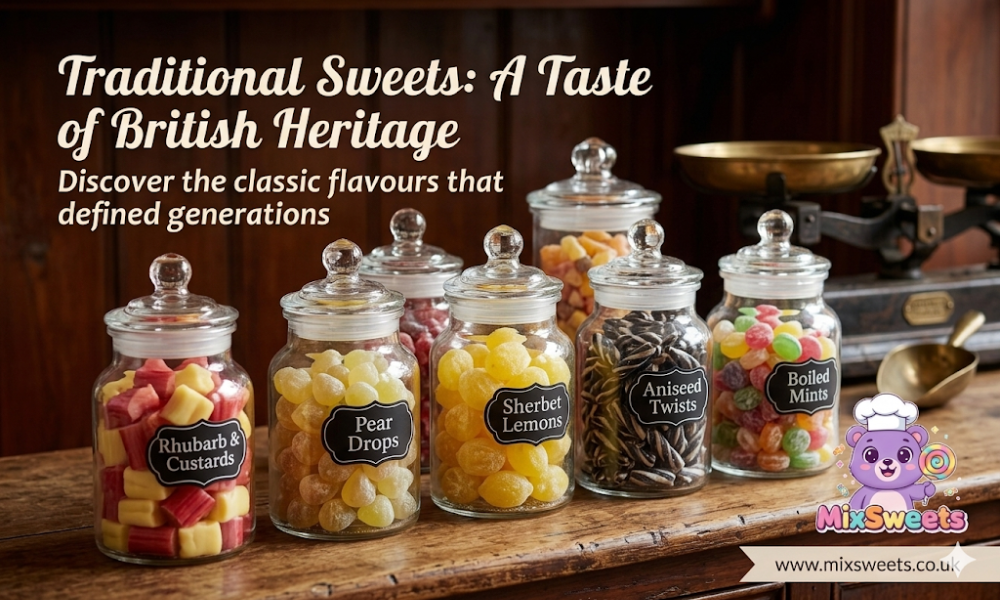
Sweet shops opened everywhere. Confectioners refined recipes during this period that still exist today with almost nothing changed. Sherbet lemons, humbugs, pear drops, rhubarb and custard sweets all of them trace their roots back to this era. And all of them are still here. That’s not luck. That’s quality surviving the way quality tends to.
The Traditional British Sweets That Actually Defined a Generation
Humbugs
The humbug has been around since at least the 1820s. More than two centuries. The recipe hasn’t moved much at all in that time. Bold peppermint, firm texture, those recognisable black and white stripes. Nothing about it feels like it needs updating and nobody has seriously tried. You start one and you commit to it. That slow, cooling, unhurried quality is exactly what made them a staple of British confectionery heritage and kept them there.
Sherbet Lemons
Here’s the thing about a sherbet lemon: it’s doing two jobs at once. The outer shell comes in sharp and citrusy, almost aggressively so. Then the fizzing centre arrives and reframes the whole experience. Sweet shops across Britain measured these out in quarter pound bags for generations and people made each one last as long as possible. They’re still one of the most instantly recognised retro British sweets in the country and honestly the reason is obvious once you’ve eaten one.
Rhubarb and Custard
Tart against creamy. Sharp against soft. These two flavours working together in one small hard sweet took real skill to get right and whoever figured it out first produced something that has anchored pick and mix selections for decades. Very specifically a British combination. Very specifically good.
Pear Drops
The colour gets you first. Red and yellow together in a jar looks genuinely appealing before you’ve even reached in. The flavour comes from isoamyl acetate rather than actual pear, which produces an intensity that fresh pear couldn’t manage anyway. Victorian confectioners developed these and they’ve sat in British sweet jars ever since. Old recipes that stick around do so because people keep choosing them. Nothing more complicated than that.
Aniseed Balls
People either love aniseed balls immediately or they don’t come back to them. There’s very little in between. The fans think they’re serious about it. That liquorice-adjacent flavour and the way a small hard sweet lasts far longer than its size suggests have kept aniseed balls in British heritage sweet culture for well over a hundred years. Loyal customers are good customers. These sweets understand that.
Everton Mints
A Liverpool sweet maker set up near the Everton football ground sometime in the 1800s, made striped black and white mint and toffee confections, and the club’s supporters started buying them. The name attached itself and never left. That’s genuinely how it happened. No branding strategy, no marketing. Just a local sweet that a local community adopted and kept. Everton mints carry that story in every piece and it’s a better origin than most sweets have.
Why These Particular Sweets Stick in Memory So Deeply
Researchers who study sensory memory consistently find that taste and smell form stronger and more immediate connections to long-term memory than sight or sound. Eating a sherbet lemon at forty pulls people back to being eight in a way that old photographs don’t always manage. That’s not sentiment — it’s the way human memory actually works.
Classic British sweets carry thirty, forty, fifty years of personal associations for millions of people across the UK. That emotional weight is commercially real. Gifting someone the specific sweets they grew up eating tells them something different to any generic present. It tells them you actually know them. Our pick and mix selection at Mix Sweets works precisely this way: you pick what goes in, and the person receiving it understands what that choice means.
The Regional Side That Doesn’t Get Enough Attention
Scotland
Scottish tablets sits in a different category to most British confectionery. Denser than fudge and intensely sweet, it gets its distinctive grainy crumble from cooking condensed milk and sugar to a very specific temperature. Get it slightly wrong either way and the texture changes completely. Tablet appears at Burns Night, at weddings, at family gatherings across Scotland with a consistency that reflects genuine cultural attachment rather than novelty. The ingredients list is short. The place it holds isn’t.
Northern England
Yorkshire toffee earned a strong reputation across northern England through straightforward quality sustained over a long time. Rich, buttery, and made with the kind of attention to process that the region’s food culture tends to respect, good Yorkshire toffee doesn’t rush. Neither do the people who eat it. Something is fitting about that.
Cumbria
Kendal Mint Cake built a reputation entirely out of proportion to its ingredients. Sugar. Peppermint oil. That’s essentially it. And yet mountaineers carried it on Himalayan expeditions in the early 20th century. Teams preparing for serious climbs packed it specifically. A confectionery product earning that kind of functional respect says a great deal about how genuinely effective it proved itself in conditions most foods wouldn’t survive.
What the Traditional Sweet Shop Represented to Communities
Corner sweet shops sat at the centre of community life across Britain for well over a hundred years. Children went after school. Adults stopped in on their way home. The routine of pointing at glass jars, watching sweets settle on old scales, leaving with a small twisted paper bag that felt like something. Not just a purchase. A small but real pleasure that people built deliberately into their weeks.
That feeling hasn’t disappeared. Our sweet gift hamper range at Mix Sweets carries the same thought behind it. Someone picks what goes in carefully. The person receiving it can tell the difference.
These Sweets Are Finding New Audiences Right Now
Artisan confectioners across Britain still produce small batch traditional boiled sweets using methods that Victorian confectioners would largely recognise. Online sweet retail now reaches customers in places where the local sweet shop shut years ago. Younger people are discovering these heritage British sweets through social media and finding genuine enthusiasm for flavours their grandparents loved. This isn’t nostalgia clinging to the past. It’s classic confectionery, finding new people who are happy it exists.
Why They’ve Lasted This Long: The Honest Version
No clever repackaging kept traditional British sweets going. No brand refresh explains their survival. The sherbet lemon tastes exactly as it did when your grandparents bought them. The humbug recipe hasn’t shifted in two hundred years. The rhubarb and custard delivers the same contrast it always delivered. These sweets lasted because they were genuinely right from the start. And genuinely right things in food don’t need much help staying relevant.Find the flavours that matter to you in our full range at Mix Sweets. They’re still exactly where you left them.