Open a bag of sherbet lemons after a week sat on a kitchen shelf and there is a reasonable chance they have welded themselves into a single amber lump. It is not that they expired. The best-before date says another eight months. The issue is where they were kept and how the bag was resealed, or more accurately how it was not. Knowing how to store candy properly does not require special equipment or a dedicated pantry. It requires understanding what actually causes sweets to go wrong. Heat gets blamed most often but moisture does the real damage, and it does it faster than most people expect.
Every major sweet type fails differently. Hard-boiled sweets such as pear drops and aniseed balls are hygroscopic, meaning they actively pull moisture out of the air. Gummy and chewy sweets like cola bottles and jelly babies swing between going sticky and going rock hard depending on humidity levels. Foam bananas and foam shrimps dehydrate and shrink when left exposed. Chocolate reacts badly to temperature swings rather than sustained warmth. Each sweet type needs slightly different handling and getting that right is the difference between a bag that lasts three weeks and one that is unusable by Thursday.
Everything below covers the storage rules for each major type sold at Mix Sweets, plus a practical shelf-life guide for when you are buying in bulk for events or simply stocking up the kitchen tin.
Why the Kitchen Is Usually the Worst Place for Sweets
Most people store sweets in the kitchen because it is where food lives and it seems logical. The kitchen is actually the most hostile environment in the house for sweet storage. Boiling a kettle releases steam. Cooking produces humidity. An oven cycling on and off raises and lowers the ambient temperature repeatedly, which creates the exact conditions that cause sugar-based confectionery to absorb moisture and degrade.
A hallway cupboard, a bedroom shelf, or a dining room sideboard at a stable temperature between 15 and 20 degrees Celsius does far more for candy freshness than any container kept in a kitchen that sees regular cooking activity. Direct sunlight is worth avoiding too. It does not just raise the temperature of the sweet. The UV component in sunlight accelerates colour fading in sweets, which is particularly noticeable in brightly coloured picks like fizzy strawberry pencils and sour watermelon slices.
Central heating creates a separate problem in winter. A very dry centrally heated room lowers the ambient humidity to a point where foam sweets and soft chews lose moisture faster than they should, going harder and less pleasant to eat within a week. A stable, moderately humid room at a consistent temperature beats any extreme of hot or dry. The ideal humidity range for most British sweet types sits between 40 and 50 percent.
Hard-Boiled Sweets Need Airtight Containment Every Time
Sherbet lemons, pear drops, aniseed balls, humbugs, rhubarb and custards, and traditional boiled sweets in general share one critical vulnerability. They are made from sugar with no internal moisture, which means they actively seek out moisture from their environment and absorb it. A twisted-closed cellophane bag left on a shelf provides essentially no barrier against a humid room. The sweets inside begin absorbing moisture within hours, and within a few days they develop a sticky surface that leads to the fusing-together problem most people have experienced at least once.
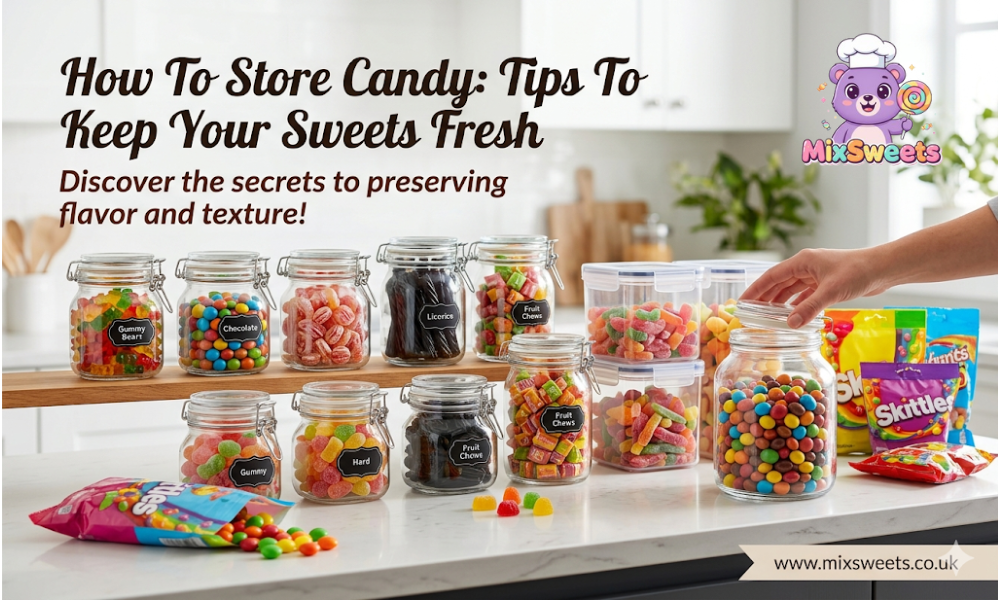
A glass jar with a rubber-sealed clip-top lid is the correct container for boiled sweet storage. Glass does not absorb moisture or odour. The rubber seal creates a proper barrier. Fill the jar as fully as possible because a half-empty jar contains more air and therefore more available moisture inside the container. One useful addition is a small amount of dry uncooked rice placed in the bottom of the jar before adding the sweets. The rice acts as a natural desiccant, absorbing residual moisture inside the jar before it reaches the sweets. It is a low-cost fix that makes a real practical difference, particularly for sherbet-filled sweets where even trace moisture activates the sherbet and makes the whole thing go soft.
What Gummy and Chewy Sweets Actually Require
Cola bottles, jelly babies, fizzy fish, gummy bears, and pick and mix chewy sweets in general can fail in two opposite directions depending on where they are stored. Too much humidity and the outer surface becomes sticky. The sweets start clumping together and eventually become difficult to separate without pulling them apart. Too little humidity, which is the more common problem in a British home with central heating running in winter, and they lose internal moisture and harden considerably beyond their intended texture.
The right storage for gummies is a sealed resealable bag or a lidded container kept in a consistent room-temperature environment away from heat sources. Press the air out of a resealable bag before sealing it. That single action reduces the moisture available inside the bag significantly and extends the usable life of the sweets by several weeks. For fizzy sweets UK specifically, the fizzy sugar coating is even more reactive to humidity than the sweet underneath it. Once that coating absorbs moisture and dissolves, the fizz effect is permanently gone. Three to four weeks after opening is the realistic window for fizzy cola bottles and sour apple belts to retain their coating at its best.
Chocolate Storage and the Fridge Mistake
Chocolate goes into the fridge and comes back out looking patchy. That pale grey or white coating is called bloom and it happens when moisture from the fridge condenses on the chocolate surface and dissolves the surface sugar, which then recrystallises as it dries. The chocolate is still edible but the texture changes and the appearance becomes unappetizing. For most British homes that stay below 22 degrees, chocolate storage belongs in a dark cupboard at room temperature, not in a fridge.
If the house regularly gets warmer than 22 degrees in summer, refrigeration becomes necessary. Wrap the chocolate tightly in cling film first, then place it in the fridge. When removing it, leave it still wrapped on the counter for an hour before opening. The wrapper prevents condensation forming directly on the surface. Temperature fluctuation rather than sustained warmth is what causes bloom, so moving chocolate in and out of the fridge repeatedly is worse than keeping it in a slightly warm cupboard consistently.
Shelf life by chocolate type varies significantly. Dark chocolate with a high cocoa content keeps well for 18 to 24 months under good conditions. Milk chocolate freshness holds for 12 to 18 months. White chocolate is the most delicate and begins losing flavour noticeably around the six to nine month mark even in good conditions, largely because of the milk fat it contains.
Foam Sweets and Marshmallows Dry Out Faster Than Expected
Foam bananas, foam mushrooms, foam shrimps, white mice, and marshmallows all contain more water than hard or chewy sweets. That water content is what gives them their characteristic soft, pillowy texture. Leave them in an open bowl at room temperature and that moisture evaporates into the room within 24 to 48 hours. The outer surface becomes firm and eventually the sweet goes noticeably hard throughout. It is still safe to eat but the eating experience is considerably less pleasant than a fresh foam sweet should be.
Sealed containment is the answer for foam sweet storage. A resealable bag with the air pressed out creates a microenvironment where the moisture the sweets contain stays local rather than dispersing into the room. A lidded glass jar works equally well and has the advantage of protecting the sweets from compression if something heavier gets placed on top of them in a cupboard. Correctly sealed foam sweets typically maintain their texture for four to six weeks after the original packaging is opened.
Never Mix Different Sweet Types in the Same Container
This one mistake accounts for a large proportion of damaged sweets in home storage. Hard-boiled sweets release nothing into their surroundings. Soft and gummy sweets release moisture as they sit. Put both types in the same container and the hard-boiled sweets absorb that moisture immediately, regardless of how airtight the container is. The problem comes from inside the container rather than outside it, which means a better lid does nothing to help.
Toffees create a different version of the same issue. They release a small amount of oil over time and that oil transfers to any other sweet in direct contact. Strawberry laces stored alongside toffees pick up the flavour. Flying saucers stored near anything moist activate and go soft. Pick and mix sweet storage works best when each sweet type lives in its own sealed bag or jar, labelled with the opening date. It sounds meticulous for home use but anyone who has stocked up ahead of a party or bought in bulk for an event will know how quickly an unsorted sweet tin becomes a problem.
How Long Your Sweets Actually Last
The shelf life figures below assume correct storage in sealed containers at a stable room temperature after opening. Poor storage conditions reduce all of them significantly.
Sweet Type
Unopened Shelf Life
After Opening (correctly stored)
Hard-Boiled Sweets
Up to 12 months
6 to 9 months in airtight jar
Gummy and Jelly Sweets
9 to 12 months
3 to 6 months in sealed bag
Fizzy Sweets
6 to 12 months
3 to 4 weeks for fizzy coating
Foam Sweets
6 to 12 months
4 to 6 weeks in sealed container
Toffees and Fudge
6 to 9 months
4 to 6 weeks, individually wrapped
Milk Chocolate
12 to 18 months
Wrap well, keep cool and dark
Dark Chocolate
18 to 24 months
Away from humidity and heat fluctuation
Lollipops
Up to 12 months
Keep in original wrappers, cool and dry
Marshmallows
6 to 9 months
Up to 4 weeks in sealed container
These figures represent what is achievable with correct storage. A sealed jar in a cool hallway cupboard hits these numbers consistently. A loosely twisted bag on a kitchen worktop does not. Keeping sweets fresh is less about how long the packet says and more about what happens to it the moment it enters your home.
Good **how to store candy** habits make the most of every order, particularly when buying in bulk for parties, events, or a well-stocked sweet tin. Dry room, sealed container, sweet types separated, and a location that does not see temperature swings throughout the day. Those four things cover the majority of the damage that happens to sweets in a typical British household.
All the sweets referenced in this guide are available at Mix Sweets in whatever quantity you need. The pick and mix range covers every sweet type discussed here with next-day UK delivery on orders placed before 3PM. For larger quantities ahead of an event, the bulk sweets collection gives you the volume and the variety to build a proper sweet selection worth storing correctly.